Running a compliant, profitable fleet gets harder as it grows. Once you’re juggling multiple vehicles, drivers, routes, and operator licence obligations, spreadsheets and phone calls stop being enough. That’s where a transport management system comes in, and understanding what one actually does is increasingly essential knowledge for anyone working in, or training to become, a Transport Manager.
What Is a Transport Management System?
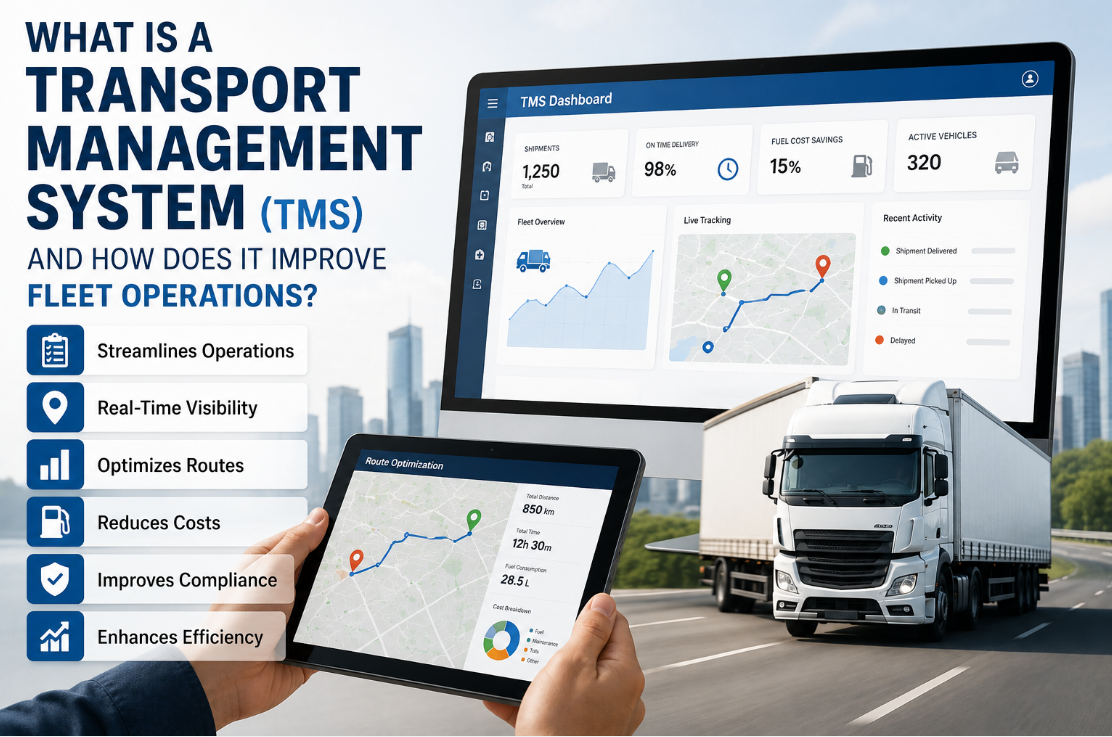
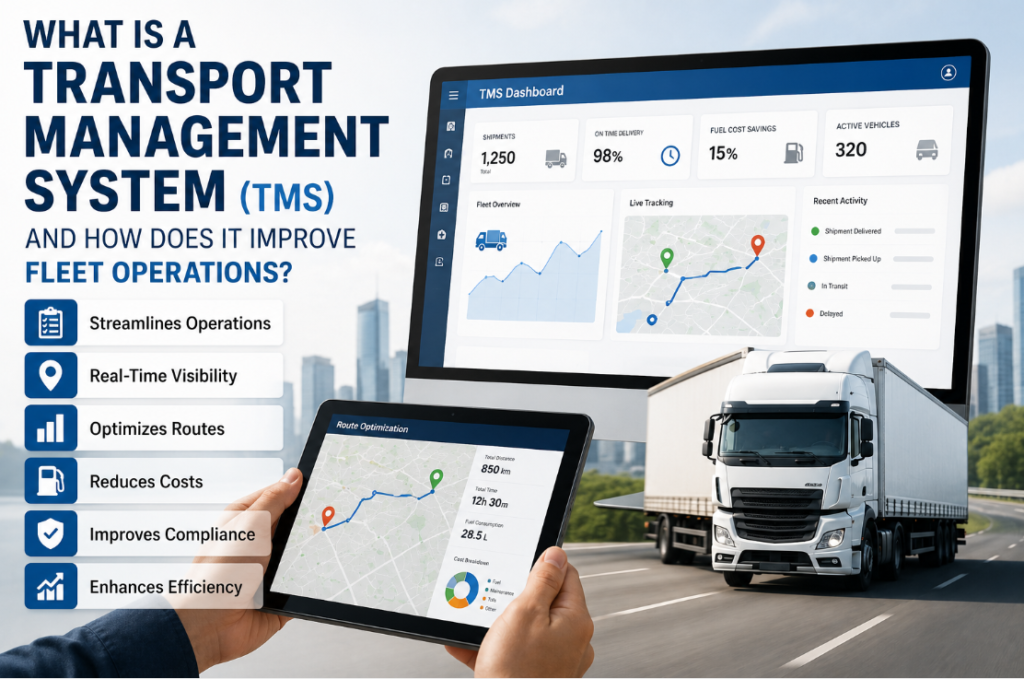
A transport management system (TMS) is software that brings the planning, execution, and monitoring of vehicle operations into one platform. Instead of managing routing, dispatch, driver hours, vehicle maintenance, and compliance paperwork separately, a TMS pulls all of it together so the whole operation can be seen and controlled from a single dashboard. Whether a business runs two vans or two hundred HGVs, the core job of a TMS is the same: turn scattered operational data into something a Transport Manager can actually act on.
The Core Features of a Modern TMS
Most transport management systems built for UK fleets share a similar set of capabilities:
- Route and load planning: optimising journeys for distance, time, and vehicle capacity, so fewer miles are wasted and fewer vehicles are needed to do the same work.
- Real-time dispatch and tracking: giving operations staff live visibility of where every vehicle is, whether jobs are running to schedule, and where delays are developing before they become missed deliveries.
- Drivers’ hours and tachograph monitoring: flagging infringements automatically rather than relying on manual checks, which is critical for staying within the rules a Transport Manager is legally responsible for enforcing.
- Maintenance scheduling: tracking service intervals, MOT and inspection dates, and defect reporting, so vehicles don’t fall out of roadworthy condition unnoticed.
- Documentation and compliance records: keeping the paperwork an operator’s licence depends on is organised, searchable, and ready for a Traffic Commissioner or DVSA inspection.
- Reporting and cost tracking: turning fuel use, journey times, and maintenance spend into figures that show exactly where money is being made or lost.
How a TMS Improves Fleet Operations
The day-to-day impact of a TMS shows up in a few consistent ways. Journeys get planned more efficiently, which cuts fuel costs and vehicle wear. Dispatch decisions get made faster because staff aren’t chasing information across phone calls and paper logs. Maintenance gets scheduled proactively instead of reactively, reducing breakdowns and unplanned downtime. And because drivers’ hours, vehicle checks, and licence conditions are tracked automatically, compliance becomes something the system supports continuously rather than something staff scramble to prove after the fact.
Put together, fleets that adopt a TMS typically see meaningful gains in operational efficiency alongside a lower administrative burden, fewer hours spent on manual scheduling and paperwork, and more time available for actually managing the business.
Why This Matters for Transport Managers
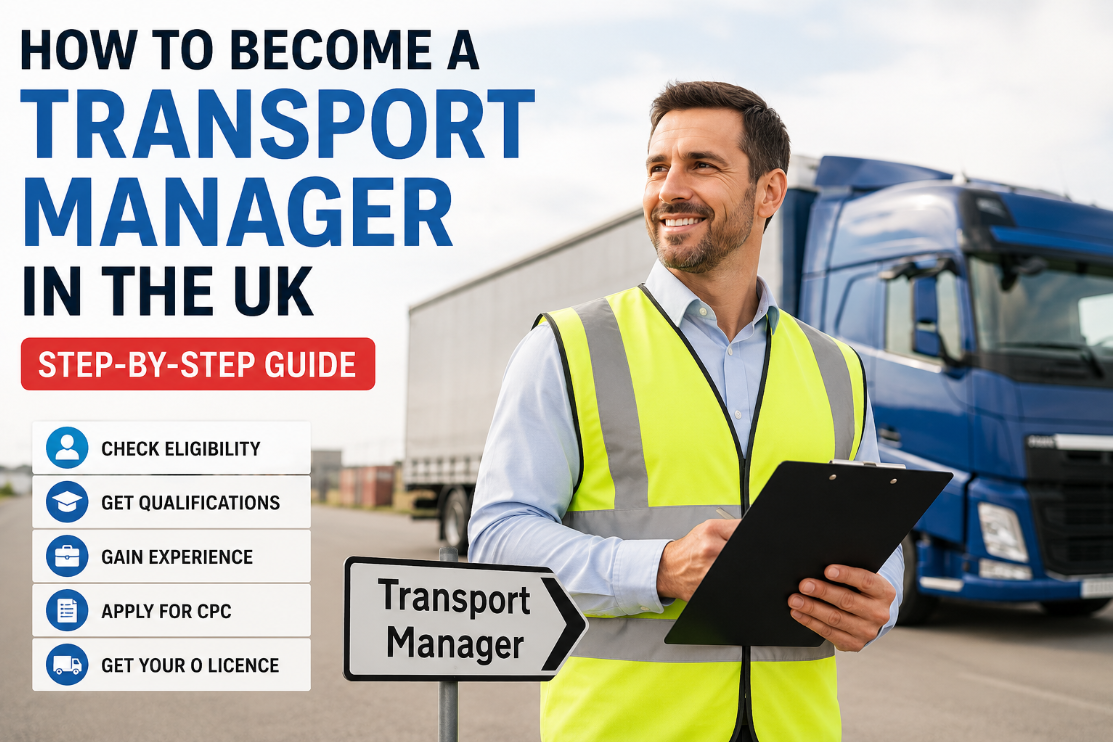
For anyone holding, or working towards, a Transport Manager CPC qualification, a TMS isn’t just a convenience, it’s a practical tool for meeting the legal duties the role carries. A Transport Manager is personally accountable for drivers’ hours compliance, vehicle roadworthiness, and the accuracy of records tied to an operator’s licence. A well-run TMS makes those duties far easier to discharge consistently, because it surfaces problems (an overdue inspection, a drivers’ hours breach, a vehicle nearing its service interval) automatically instead of relying on someone remembering to check.
That said, software doesn’t replace the judgement and legal knowledge a qualified Transport Manager brings. A TMS can flag that a driver is close to a working time limit or that a vehicle is due for inspection, but it’s the Transport Manager’s understanding of operator licensing, enforcement expectations, and commercial pressures that determines how those flags get acted on. The two work best together: the system handles visibility and record-keeping at scale, the qualified Transport Manager handles the decisions and accountability.
Choosing the Right System
Not every fleet needs the same TMS. A small operator running a handful of vehicles may only need core route planning and compliance tracking, while a larger fleet with multiple depots will benefit from deeper integration with telematics, fuel cards, and driver apps. The right starting point is usually to map out which manual processes are causing the most delay or risk today, whether that’s drivers’ hours tracking, maintenance scheduling, or reporting, and choose a system built to solve that first.
The Bottom Line
A transport management system won’t replace the expertise of a qualified Transport Manager, but it gives that expertise far more reach, turning scattered data into clear, actionable oversight of an entire fleet. For businesses serious about compliance and efficiency, and for Transport Managers serious about doing the job well, understanding how to use one is quickly becoming as important as understanding the regulations themselves.
Sources consulted: Oracle: What Is a Transportation Management System?, FleetOwner: What is a transportation management system?, Neurored: 43 Essential Features of a Modern TMS.