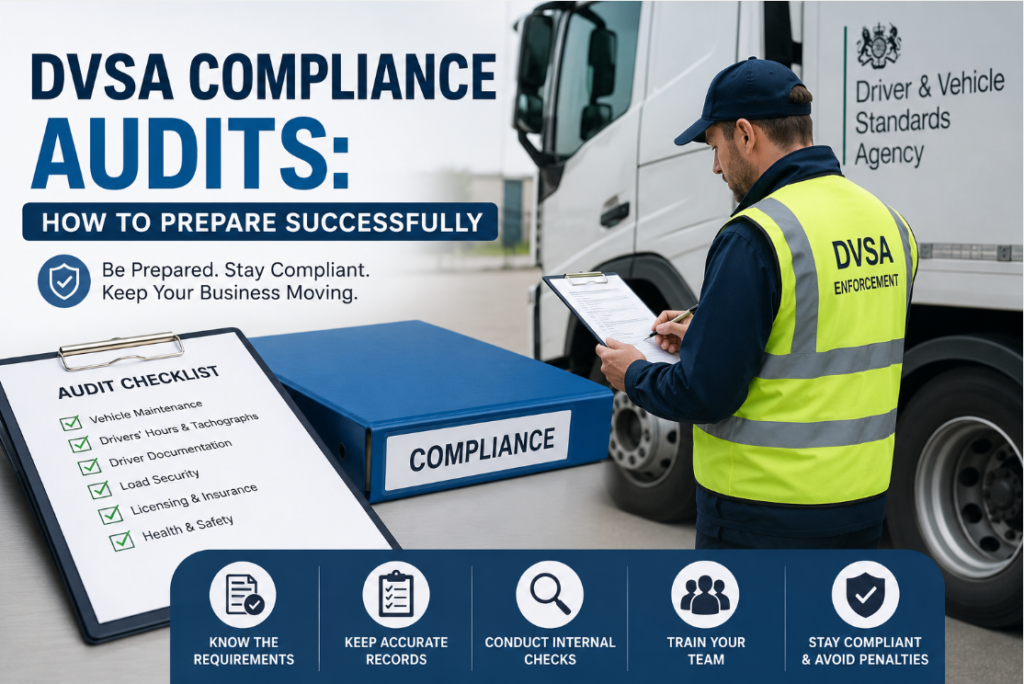
A DVSA compliance audit can feel daunting, but with the right preparation, it becomes a straightforward confirmation of good practice rather than a stressful ordeal. Whether facing a standard operator licence check or an Earned Recognition audit, understanding what examiners look for makes all the difference.
Auditors typically focus on three core areas: operational compliance, legal and licensing accuracy, and vehicle maintenance. Operational compliance covers load security, overloading checks, and correct transport documentation. Legal and licensing accuracy confirms the operator’s status matches what’s on record, including correctly specified operating centres and vehicles. Vehicle maintenance and safety checks ensure vehicles meet required standards for brakes, tyres, and lights, with a clear trail of evidence behind every inspection.
Documentation is where most operators either pass comfortably or run into trouble. Essential records include planned maintenance inspection (PMI) records, brake test reports, first-use inspections after a vehicle has been off the road, and tachograph lead-in reports confirming walkaround checks took place. Safety inspection sheets, defect records, and brake evidence need to be retained for at least 15 months, so gaps in filing systems can become a real liability during review.
One detail that catches operators out is defect follow-through. A safety inspection sheet showing a defect is only half the story. Auditors expect to see that the defect was actioned promptly, signed off by a competent person, and linked back to the original report. Missing that connection can lead an examiner to question the reliability of the entire maintenance system, not just the one record.
Preparation should also include a debrief process. For standard licences, this should involve both the Transport Manager and a director, partner, or sole trader, showing that compliance responsibility is understood and shared at the right levels of the business.
The most successful audits come down to consistency rather than last-minute scrambling. Operators who maintain organised, up-to-date records year-round, rather than assembling them just before an inspection, tend to sail through with minimal findings. Treating compliance as an ongoing discipline, not a once-a-year exercise, is what ultimately keeps a fleet audit-ready and penalty-free.
Sources:
How to Prepare For a DVSA Earned Recognition Audit – JMW
Operator Compliance Audits – GOV.UK
DVSA Desk Based Assessment Audits – Total Compliance